CAD Model
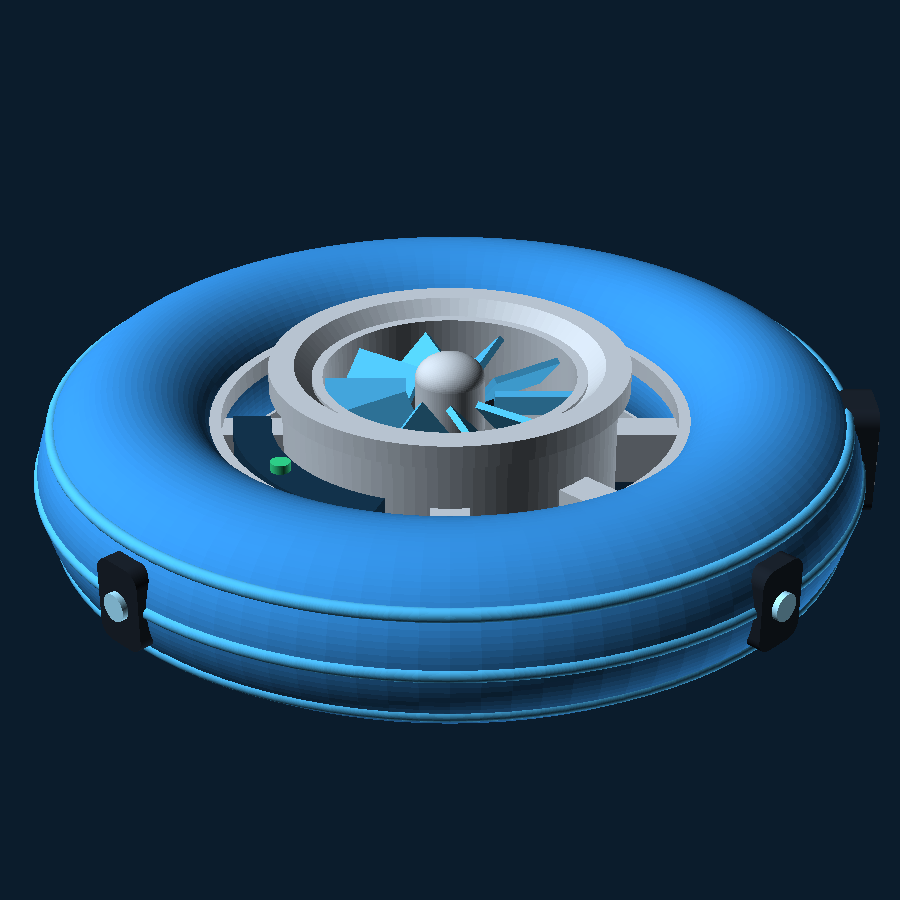 360° · Drag to rotate
O-Seal Torus Design
Full 3D model of the O-Seal device. Drag to rotate.
360° · Drag to rotate
Full 3D model of the O-Seal device. Drag to rotate.
360° · Drag to rotate
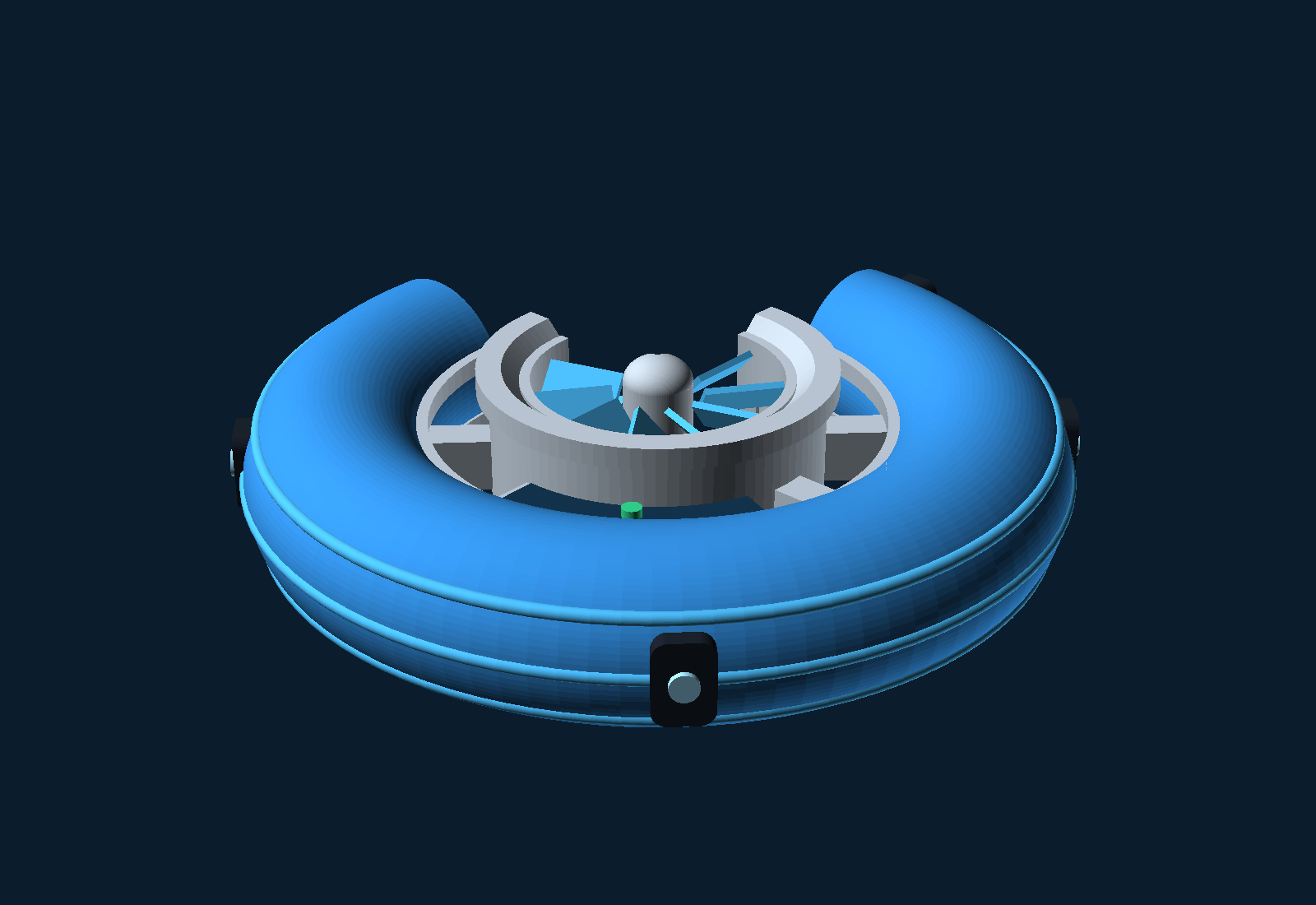
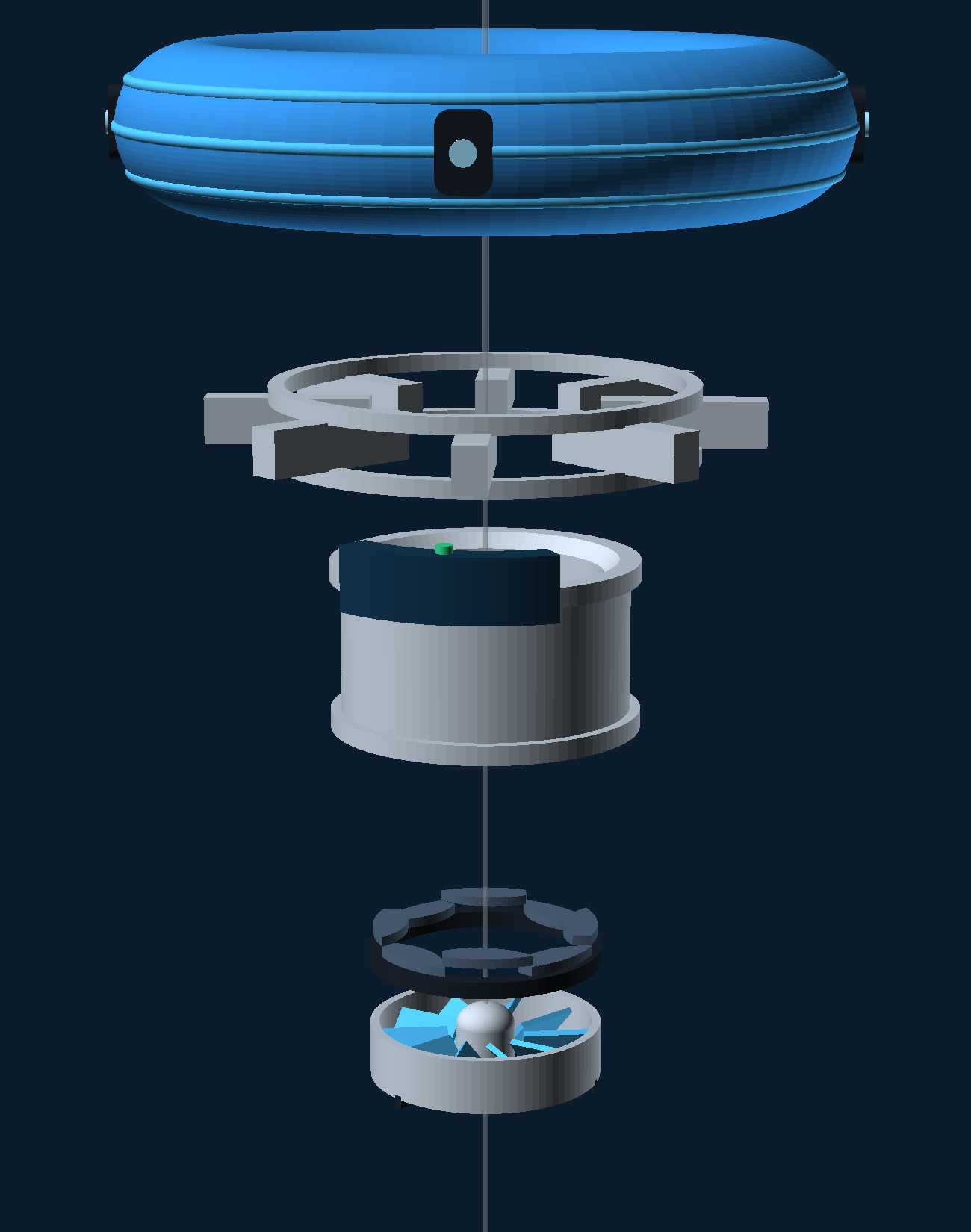
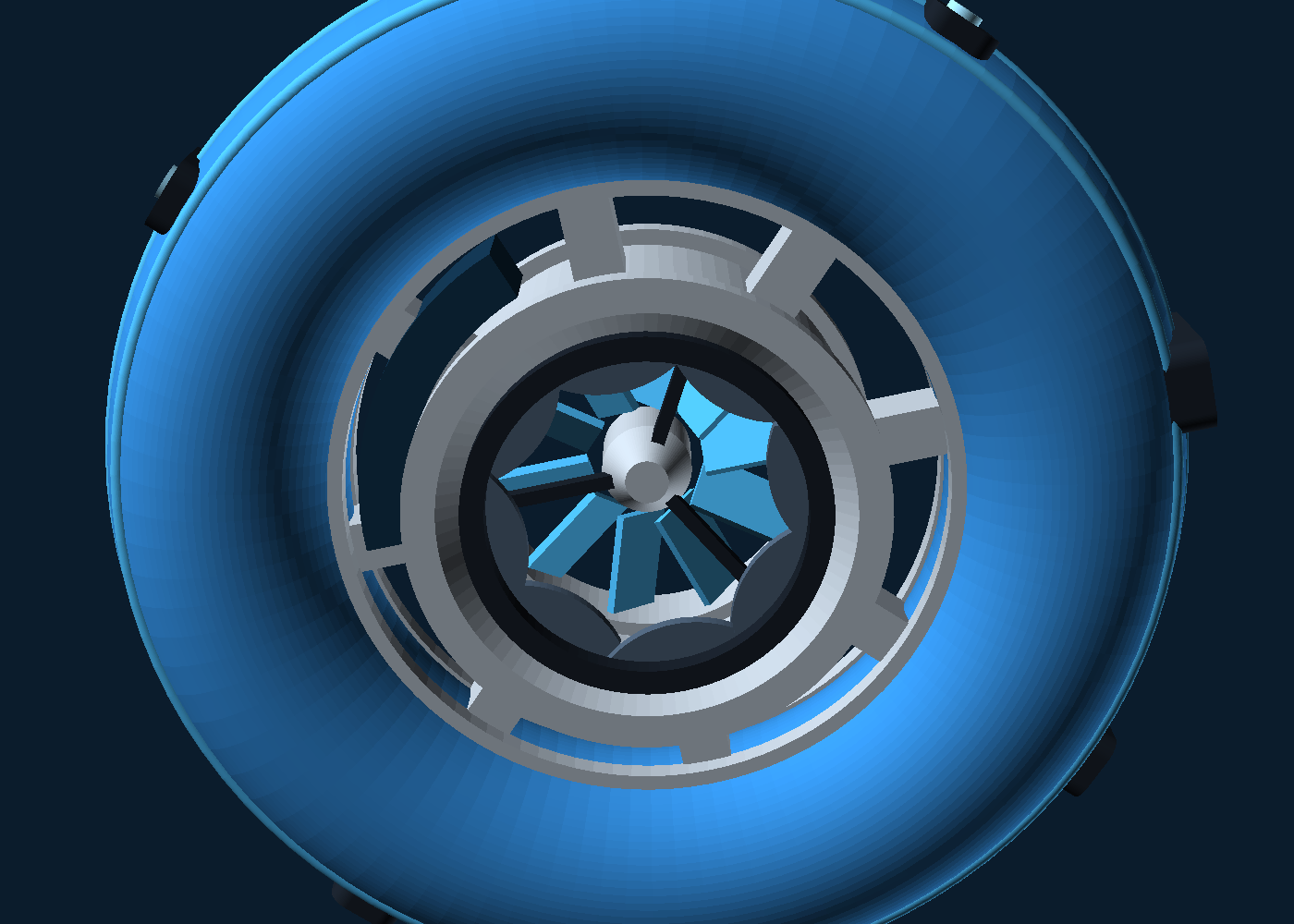
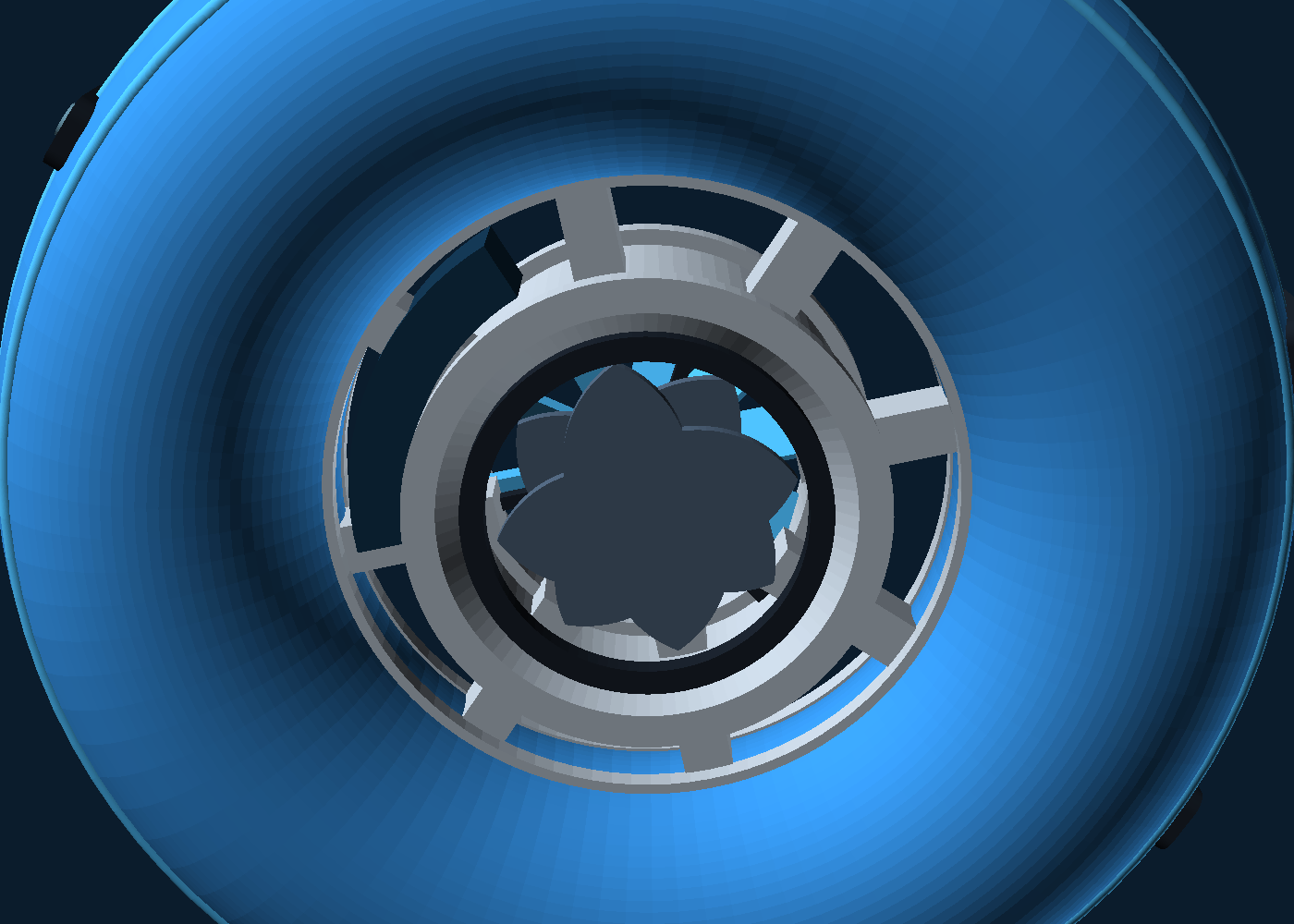
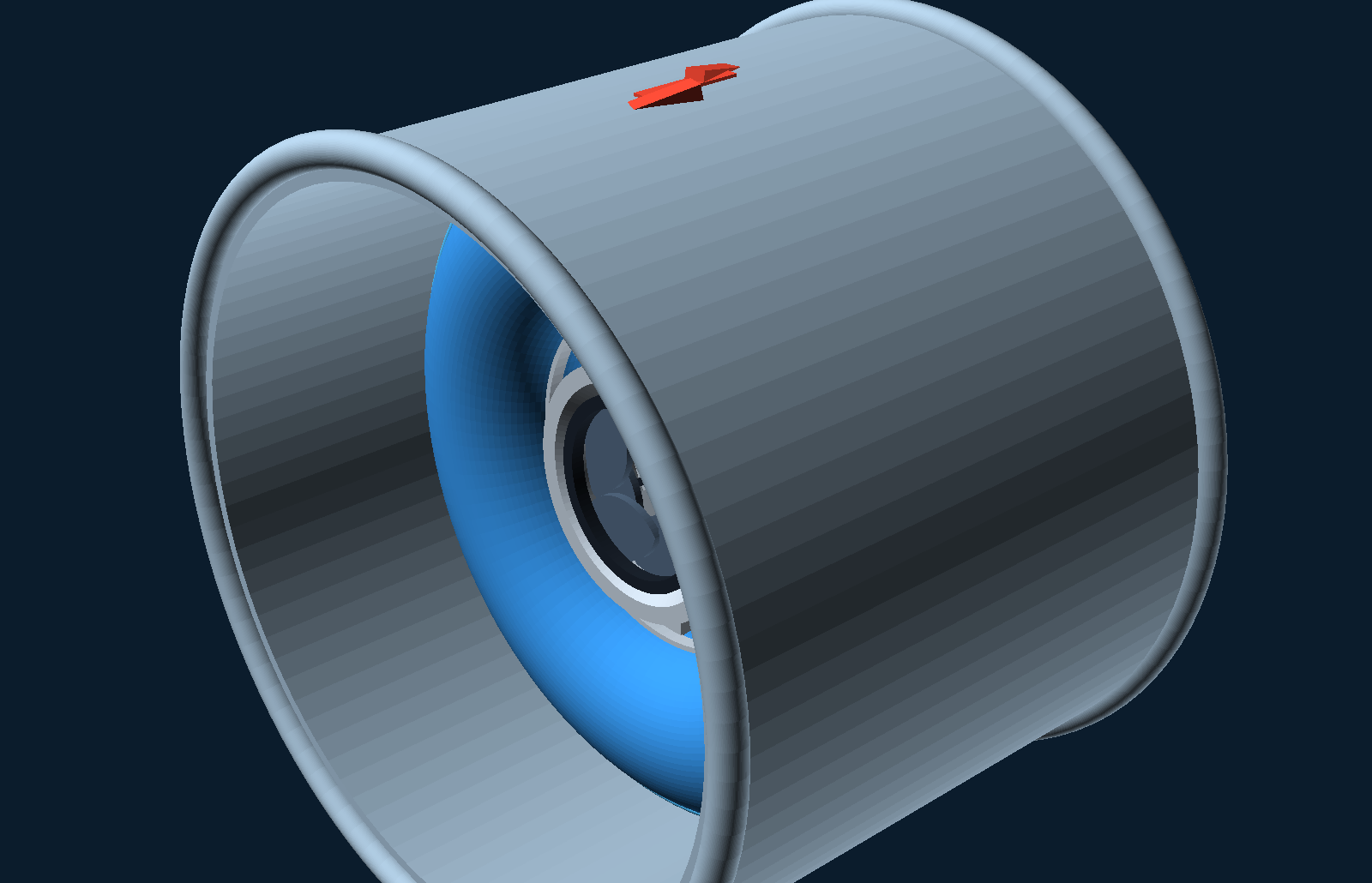
Maintains an open flow channel for normal water throughput while providing structural support for the capsule.
Durable polymer housing that protects internal components and allows the capsule to navigate through pipe bends and junctions.
Miniaturized sensors continuously monitor local pressure differentials to detect leak signatures with high precision.
Short-range underwater modems coordinate multiple units for complex repairs. Through-wall transmission is in development, with bench validation underway.
Onboard microcontroller regulates navigation, sensor processing, and iris deployment decisions independently.
When a fracture is detected, the iris closes to throttle the flow channel while the outer shell inflates against the pipe wall, anchoring the capsule and creating a secure long-term seal at the leak site.
An O-Seal flows in with the water, reaches the crack, and inflates to seal it. The leak stops and the fracture goes green.
An early-stage functional prototype tested against a transparent PVC pipe and faucet setup. The inflatable balloon mechanism demonstrated the core sealing concept before the torus design was finalized.
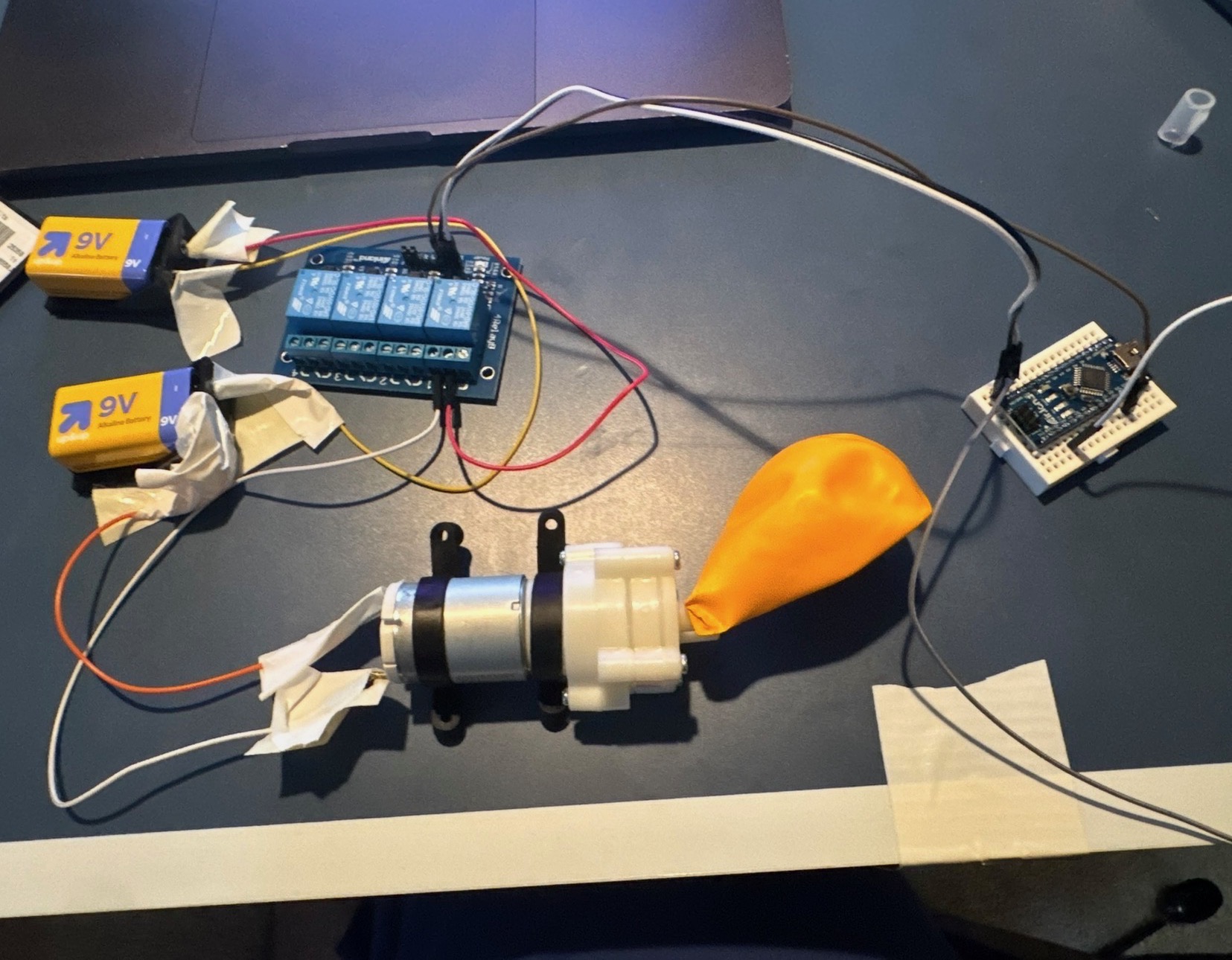
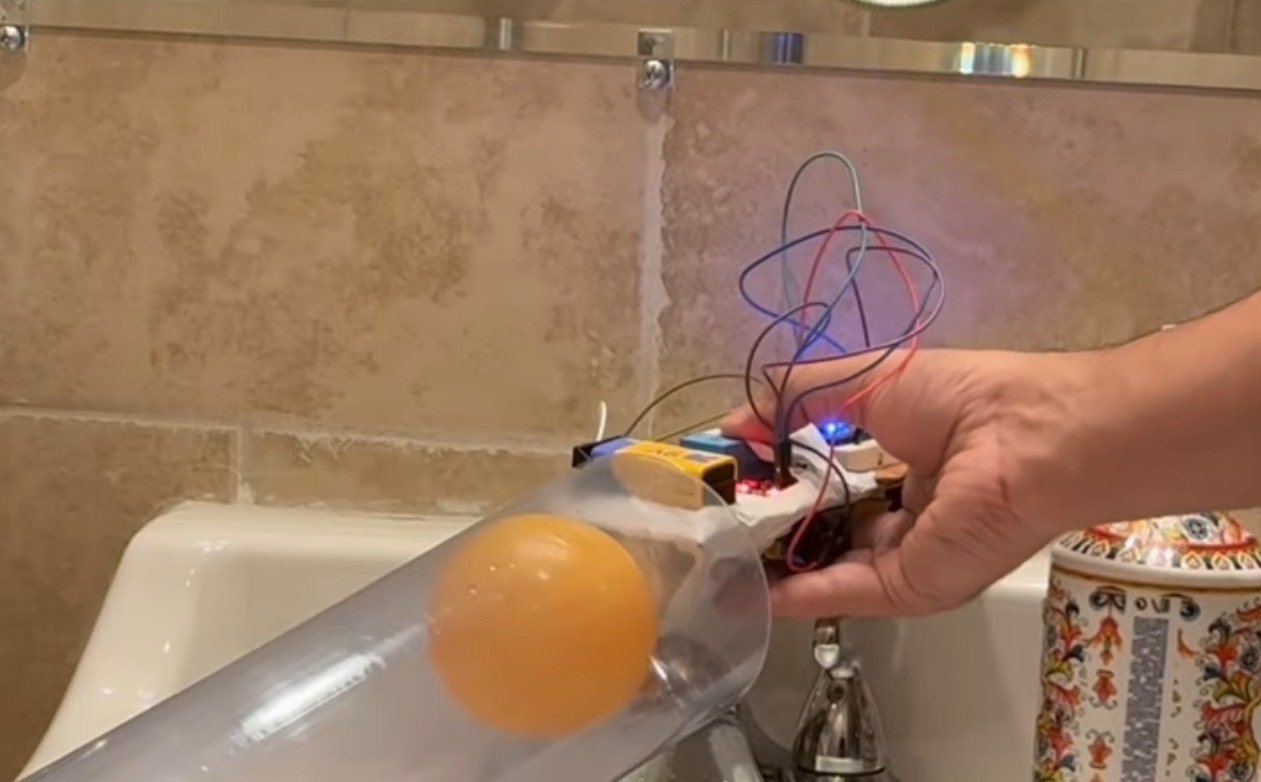
The functional prototype generated sufficient pneumatic pressure via compressor (with CO² cartridge as backup) to halt fluid loss, retaining over 97% of water that would otherwise have escaped through the breach in bench-scale testing.*
High-frequency pressure sensors and algorithmic pneumatics trigger full outer-ring inflation in under one second upon detecting a leak signature. Faster than any human-dispatched repair crew can respond.
Multiple capsules coordinate without human intervention or cellular signals, using localized acoustic sound-wave communication to hand off tasks and systematically clear a pipe segment.
O-Seal's detection engine is grounded in peer-reviewed fluid mechanics research. Here is why PINNs outperform conventional AI in this domain.
Unlike traditional AI that requires millions of real-world failure examples, a PINN embeds the exact mathematical laws of physics (including the Navier–Stokes equations for fluid dynamics) directly into its loss function. The model cannot violate physics.
Academic research shows PINNs can accurately model hydraulic states and identify anomalies like pressure drops using up to 80% less training data than purely data-driven models, making them ideal for lightweight, real-time deployment on microcontrollers inside a moving capsule.
Identifying the size and location of a leak from only internal pressure readings is a classical inverse problem in fluid mechanics. A study in Computer Methods in Applied Mechanics and Engineering demonstrated that PINNs excel at solving these inverse problems in high-velocity fluid flow, accurately backtracking a subtle pressure wave to its exact physical origin.
O-Seal’s neural network is trained on extensive synthetic datasets mimicking real-world fluid-structure interactions. It processes pressure readings hundreds of times per second to differentiate a dangerous pipe crack from normal operational fluctuations such as a pump turning on.